Agricultural property rodent control on the South Plains.
Agricultural properties on the South Plains deal with the highest Norway rat and house mouse pressure in the region — grain storage, cotton gin debris, livestock feed, and open equipment sheds create food and shelter conditions that support large populations year-round.
Call (806) 207-3665Agricultural property rodent control is a rodent management program designed for farms, ranches, grain storage facilities, cotton gins, and feed operations on the South Plains — properties where grain, feed, and open-structure shelter create the most favorable rodent conditions in the region. In the Lubbock area, agricultural accounts extend from the city edge into Hockley, Lynn, Crosby, Floyd, and Garza counties.
Why ag properties are the highest-pressure rodent environments on the South Plains.
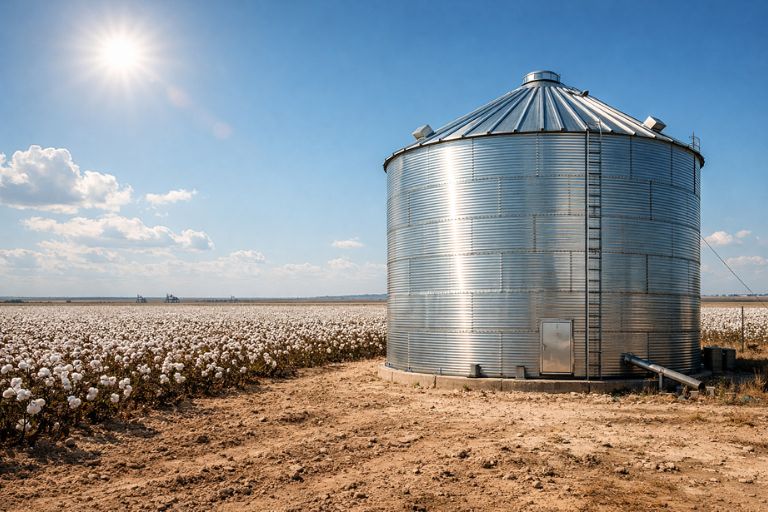
Agricultural properties have everything rodents need: abundant food (grain, cottonseed, livestock feed), water (irrigation lines, stock tanks, condensation from equipment), and shelter (stored equipment, hay bales, wood-frame outbuildings with gaps at every board). Norway rats thrive at agricultural sites — they burrow under concrete slabs, along foundation walls of grain bins, and in the burrow systems that develop under feed storage. The rodent pressure at ag properties also creates secondary risks: grain contamination and spoilage, structural damage to outbuildings, chewed electrical wiring on equipment, and livestock disease transmission risk.
What agricultural rodent control includes.
- Property assessment — grain storage layout, feed operation, equipment storage, and outbuilding inventory reviewed before any treatment is proposed.
- Exterior bait station network — commercial-grade tamper-resistant stations at grain bin perimeters, along outbuilding foundations, and near equipment storage. Station density matched to pressure level.
- Burrow treatment — active Norway rat burrow systems treated and collapsed near grain storage and foundation perimeters.
- Interior outbuilding trapping — snap traps deployed inside equipment sheds, hay storage, and other outbuildings on confirmed runways.
- Exclusion recommendations — structural gaps in outbuildings flagged; recommendations provided for which gaps to prioritize for sealing.
- Scheduled service rotation — monthly or bi-weekly station service, burrow check, and trap rotation.
Our process.
Property assessment
Grain storage, feed operation, outbuildings, and irrigation infrastructure mapped. Pressure profile established.
Bait station network
Commercial-grade stations at grain bin perimeters, outbuilding foundations, and feed storage.
Burrow treatment
Active Norway rat burrow systems treated and collapsed.
Outbuilding trapping
Snap traps on confirmed runways inside equipment sheds and hay storage.
Scheduled rotation
Monthly or bi-weekly visits. Stations serviced, burrows checked, traps rotated. Service records maintained.
Pricing in Lubbock.
| Scenario | Typical range | Notes |
|---|---|---|
| Small farm (under 50 acres, 2–4 outbuildings) | $500–$900 | Assessment + station install + burrow treatment |
| Mid-size operation (50–200 acres) | $800–$1,500 | Larger perimeter, more stations, outbuilding trapping |
| Grain storage / cotton gin | Quoted on-site | Footprint-dependent |
| Monthly service rotation | $200–$500/month | Station service + burrow check + report |
Inspections are free. Quotes confirmed before work starts.