Warehouse rodent control in Lubbock, TX.
Warehouses and distribution centers in Lubbock face rodent pressure from loading docks, stored pallet goods, and the structural gaps common in metal-construction buildings. Exterior bait networks, dock-door sealing, interior monitoring programs, and audit-ready documentation are the standard of care.
Call (806) 207-3665Warehouse rodent control is a specialized rodent management program for distribution centers, storage facilities, cold-storage operations, and light-industrial buildings where pallet storage, loading dock traffic, and metal-building construction create a specific set of entry-point and food-source vulnerabilities. In Lubbock, TX, warehouse accounts are concentrated in the Loop 289 industrial corridors and the west-side distribution zones.
Why warehouses are high-risk rodent environments.
Warehouses create ideal rodent conditions: dark, undisturbed pallet storage that makes perfect nesting habitat; loading dock doors that sit open for extended periods; dock leveler gaps and seal voids that provide ground-level entry around the clock; and the food-grade or agricultural product storage that attracts Norway rats. Metal-construction buildings also have gaps at every fastener penetration point along the foundation course — dozens of potential entry points that most operators do not know to check.
The regulatory stakes are higher for warehouses storing food-grade product, pet food, or pharmaceutical goods. FSMA compliance requirements include documented pest control programs. We produce service records formatted for food safety audit use.
What warehouse rodent control includes.
- Exterior bait station network — commercial-grade tamper-resistant stations along the full building perimeter, with density concentrated at dock doors and corners.
- Dock door exclusion — dock leveler gap sealing, dock seal and shelter inspection, and bottom-of-door sweep assessment for all active loading bays.
- Interior monitoring program — glue boards and snap traps in wall-base locations, pallet staging areas, and mechanical rooms on a mapped grid.
- Foundation perimeter sealing — metal-building fastener penetrations and foundation course gaps closed with appropriate materials.
- Scheduled service — bi-weekly or monthly visits for station rotation, interior trap check, and documentation.
- Audit-ready documentation — service reports formatted for food safety and property management audit review.
Our process.
Facility assessment
Full exterior perimeter, loading dock, pallet storage layout, and mechanical rooms. Entry-point map created.
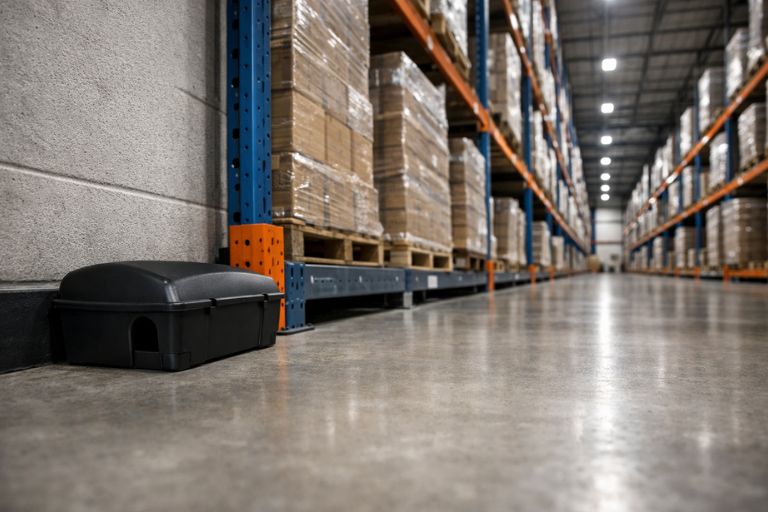
Station and trap installation
Exterior bait network installed. Interior trap grid deployed on pallet staging and wall-base locations.
Dock exclusion
Dock leveler gaps sealed. Dock seals inspected. Door sweeps assessed on all active bays.
Scheduled service
Bi-weekly or monthly visits — stations checked, traps cleared, exclusion maintained, documentation generated.
Audit documentation
Service records formatted for food safety or property management audit review after every visit.
Pricing in Lubbock.
| Scenario | Typical range | Notes |
|---|---|---|
| Small warehouse (under 10,000 sq ft) | $500–$900 | Setup + station install + interior traps |
| Medium warehouse (10,000–50,000 sq ft) | $800–$1,500 | Larger perimeter, more stations and traps |
| Large distribution center (50,000+ sq ft) | Quoted on-site | Full facility assessment required |
| Monthly service rotation | $200–$500/month | Depends on facility size and station count |
Inspections are free. Quotes confirmed before work starts.