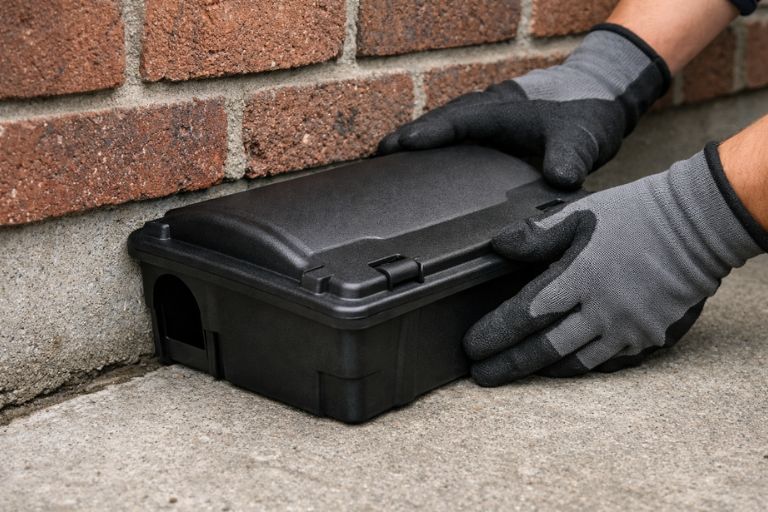
Rodent bait station installation in Lubbock, TX.
A bait station network is only as effective as the placement and the service behind it. We install commercial-grade tamper-resistant stations at correctly spaced intervals on confirmed rodent runways — and service them on a rotation that keeps the program active rather than just present.
Call (806) 207-3665Rodent bait station installation is the professional setup of a perimeter or interior rodent bait program using tamper-resistant commercial-grade stations placed at mapped locations on confirmed rodent runways — combined with scheduled service visits to inspect, replenish, and document station activity. In Lubbock, TX, bait station programs are used for ongoing perimeter control at commercial properties, as part of residential exclusion programs, and as the foundation of agricultural and oilfield site rodent management.
Why professional bait stations differ from hardware-store products.
Consumer rodenticide products — loose bait blocks or bait trays — are not rated for use in accessible public areas because they pose a risk to pets, children, and non-target wildlife. Professional tamper-resistant stations are designed to allow rodents to enter and access bait while preventing access by larger animals. They're also designed to be serviced on a rotation: bait checked, replenished if depleted, activity logged, and station condition assessed on each visit. A bait station that runs out of bait and isn't serviced is not a rodent control program — it's furniture.
Placement matters equally. Bait stations placed in the wrong location — mid-wall instead of in a corner, or along the building face where rodents don't travel — produce poor results regardless of bait quality. We map station locations based on confirmed runway evidence before installation, not on a generic spacing template.
What bait station installation includes.
- Runway assessment — confirm rodent activity and travel routes before station placement. Stations go where rodents are, not where they might be.
- Station mapping — each station is numbered and its location documented with a photo. The map is maintained for service continuity.
- Commercial-grade station installation — tamper-resistant, weather-resistant stations appropriate for the installation environment (exterior, interior, agricultural, industrial).
- Initial bait loading — bait selection matched to species (Norway rat vs. roof rat vs. house mouse) and environment (food-adjacent vs. non-food-adjacent).
- Scheduled service program — monthly or bi-weekly station inspection, bait replenishment, activity logging, and written service report.
Pricing in Lubbock.
| Scenario | Typical range | Notes |
|---|---|---|
| Residential perimeter program (6–10 stations) | $300–$500 setup | Includes first month of service |
| Commercial perimeter program (10–30 stations) | $500–$1,200 setup | Station count based on facility size |
| Agricultural / industrial (30+ stations) | Quoted on-site | Property-specific station map required |
| Monthly service (after setup) | $75–$300/month | Depends on station count and site type |
Inspections are free. Quotes confirmed before work starts.