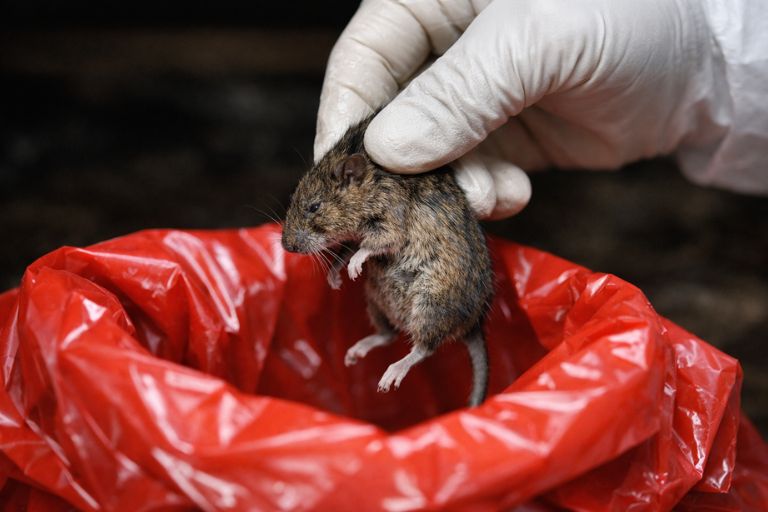
Dead rodent removal in Lubbock, TX.
A dead rat in the wall or attic produces a distinctive odor that peaks in the 3–7 days after death and can last for weeks if the carcass isn't recovered. We locate dead rodents by odor probe and experience — usually without opening drywall — and remove them along with deodorization treatment.
Call (806) 207-3665Dead rodent removal is the location and physical extraction of rodent carcasses from wall voids, attics, crawl spaces, and other inaccessible areas, followed by deodorization treatment of the affected area. In Lubbock, TX, dead-rodent calls are most common 5–14 days after a baiting program, when animals that consumed bait have died in wall voids or attic spaces, and in summer when rodents that died during winter trapping programs produce odor as temperatures rise.
Finding a dead rodent without opening the wall.
The most common fear homeowners have about a dead-rodent smell is that finding it will require cutting open drywall. In most cases, it does not. Dead rodents have predictable resting locations based on species behavior and construction type: roof rats die near their nest sites in attic insulation or along attic beams; house mice die in wall voids near their food source (typically the kitchen wall cavity) or inside cabinet toe-kicks. An experienced technician using an odor-probe methodology and knowledge of where rodents travel in common Lubbock construction types can locate most carcasses without structural damage.
When drywall access is genuinely required, we identify the smallest possible cut location, make a clean access hole, and patch it on the same visit where the property allows it.
What dead rodent removal includes.
- Odor investigation — systematic room-by-room and area-by-area odor assessment to localize the carcass before any physical work.
- Attic and crawl-space access — physical inspection of attic and crawl space where accessible, which resolves most dead-rodent odor calls without wall access.
- Carcass removal — PPE-protected extraction and proper disposal of recovered carcasses.
- Area disinfection — affected surface treated with EPA-registered disinfectant after carcass removal.
- Enzymatic deodorization — enzymatic odor neutralizer applied to the removal location and surrounding area.
- HVAC assessment — if odor is present throughout the home, HVAC return-air proximity to the carcass location is checked.
Pricing in Lubbock.
| Scenario | Typical range | Notes |
|---|---|---|
| Dead rodent removal — accessible location (attic/crawl) | $150–$300 | Location + extraction + deodorization |
| Wall-void investigation and removal | $200–$450 | Odor probe + wall access if required + deodorization |
| Same-day emergency dead-rodent call | $200–$400 | Dispatch fee + removal on same visit |
| Multiple carcasses (post-bait program) | $200–$500 | Depends on count and access |
Inspections are free. Quotes confirmed before work starts.