This guide is designed to be honest rather than promotional. DIY mouse traps do work in specific situations, and recommending professional service for every mouse problem would be misleading. The question is which situation you're in. Here's an honest assessment of when each approach produces good results in Lubbock's specific context.
When DIY mouse traps work in Lubbock.
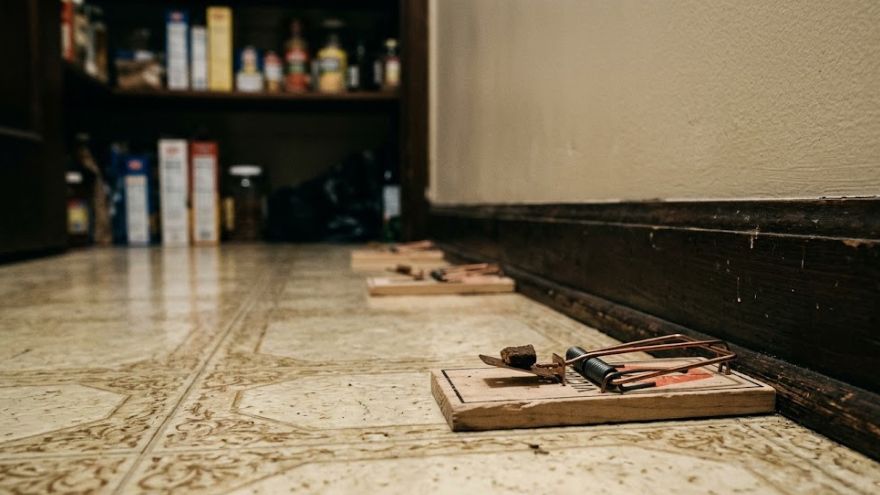
DIY snap traps are genuinely effective for early-stage, contained mouse infestations with the following characteristics: activity in only one room or area, evidence of only one or two animals (isolated droppings, no audible multi-location activity), no weep-hole access identified at the exterior, and activity discovered within the first few days of noticing it. In this scenario, 3–4 snap traps placed correctly along the confirmed runway, checked every 2 days, will resolve the problem within 1–2 weeks. This is probably 20–25% of the mouse calls we get.
When DIY mouse traps don't work in Lubbock.
The larger category is infestations where DIY trapping reduces activity temporarily but doesn't resolve the infestation. This happens when: the colony has been active long enough to have multiple animals (established droppings in two or more locations, consistent nightly activity), the colony has an established entry route through weep holes that keeps supplying replacement animals from outside, or the traps are placed incorrectly and aren't intercepting the actual runway. In this scenario, traps catch some animals, the activity quiets for a week, and then it picks back up as the remaining colony continues breeding and the weep holes continue admitting new animals.
The weep-hole problem that makes DIY less effective in Lubbock.
This is Lubbock-specific and worth understanding. A Lubbock brick-veneer home has 40–80 weep holes open to the exterior, each of which provides direct access to the wall cavity. A mouse inside a wall that is killed by a snap trap is replaced by another mouse from outside within days through the same weep holes — because the scent trails through the weep holes attract additional animals. DIY programs that don't address the weep holes are catching from an open-ended supply. Professional programs seal the weep holes with copper mesh as part of the exclusion step, closing the supply line.
Cost comparison.
A DIY program that runs 4 weeks without fully resolving the infestation costs: snap traps ($15–30), bait or cheese ($5–10), and 4 weeks of time and frustration. A professional program that resolves the infestation on the first visit and includes exclusion costs $350–$650 for a standard Lubbock home. The professional program is more expensive upfront; the DIY program that doesn't work costs time and produces a partially treated infestation that is more expensive to resolve because the colony is now more established.
The honest recommendation.
Try DIY if: the activity is in one room, started recently, and you can confirm there are only one or two animals. Use the right traps (snap, not glue for primary trapping), place them correctly (flush to the wall, trigger end facing the wall), and check every 2 days. If you've caught 2–3 animals in the first week and activity has stopped at the follow-up droppings check: the DIY program worked.
Call a professional if: activity is in more than one room, droppings are present in multiple locations, sounds are consistent and multi-directional, you've already run a 2-week DIY program without resolution, or you find evidence of weep-hole entry on the exterior. At that point, the colony is established enough that professional exclusion and a structured treatment program produce a faster and more reliable resolution than continued DIY.
See our mice control services page for the full professional program approach. Our free inspection is a good starting point if you're not sure which situation you're in.