The short answer is: yes, DIY mouse traps work — in the right situation. The longer answer is that the situation where they work reliably is narrower than most Lubbock homeowners expect. This guide covers the specific conditions where hardware-store snap traps produce good results, and the conditions where they reduce activity temporarily without resolving the infestation.
When snap traps work well.
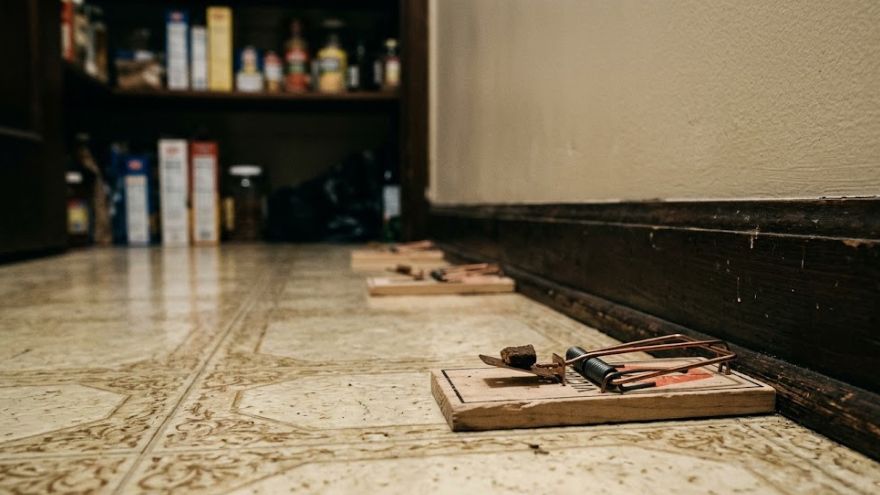
Snap traps are most effective for early-stage, contained infestations. The conditions that make them work: a single entry point you've already identified and can monitor, activity concentrated in one room or area, a small number of animals (1–3, based on isolated droppings in one location and no multi-location audible activity), and discovery within the first week or two of infestation onset. In these conditions, 3–4 correctly placed snap traps will resolve the problem within 1–2 weeks. Correct placement means: flush against the wall, trigger end facing the wall surface, on the confirmed runway where you've found droppings.
When snap traps don't fully work.
Snap traps reliably reduce a population but often don't eliminate it when the colony has reached a size where replacement is faster than trapping. House mice breed rapidly — a female can produce 5–8 litters per year with 4–6 offspring per litter. In an established wall-void colony with an open weep-hole entry route, catching 2–3 animals per week doesn't outrun the colony's reproduction. You'll catch mice indefinitely, but the population won't go to zero unless you also close the entry points.
The other failure mode is trap-shyness. Mice that have been triggered by or narrowly escaped a snap trap become wary of similar traps in the same location. A snap trap that catches one mouse and then stops triggering isn't necessarily set correctly — the remaining population may have learned to avoid it. Rotating trap types, moving trap locations slightly, and using multiple trap types simultaneously reduces this problem.
The Lubbock-specific problem: open weep holes.
A standard Lubbock brick-veneer home has 40–80 weep holes at the base of the brick. Every one of them is an open mouse entry point. A snap trap program in a Lubbock home that doesn't address the weep holes is catching from an open-ended supply. You'll catch mice indefinitely. Sealing the weep holes with copper mesh closes the supply line. Until that step is done, no trap program — DIY or professional — will produce a permanent result.
The decision point.
Run a DIY program if: activity is in one area, recently discovered, and you can confirm only 1–3 animals. Run it for 2 weeks. If you catch 2–3 mice in week one and activity stops at the follow-up droppings check: DIY worked. Call a professional if: you've been running traps for 2+ weeks and still have activity, droppings are in multiple rooms, you can hear activity in multiple wall sections, or you've caught 5+ mice and the population doesn't seem to be decreasing. At that point, professional exclusion sealing and a structured program produce more reliable results than continued DIY trapping. See our mice control service for the full program approach.