Rodent droppings in a Lubbock home aren't just a cleanliness problem — they're a documented public health risk if handled incorrectly. The specific diseases associated with rodent droppings in the South Plains region, the cleanup protocol that reduces exposure risk, and the situations where professional cleanup is the safer choice are covered in this guide.
Diseases associated with rodent droppings in Lubbock.
Hantavirus Pulmonary Syndrome.
Hantavirus is the most serious rodent-associated disease risk in the South Plains. The primary reservoir is the deer mouse (Peromyscus maniculatus), which is present throughout West Texas including the Lubbock area. The virus is transmitted by inhaling aerosolized particles from infected rodent droppings, urine, or nesting material. It is not transmitted person-to-person. Hantavirus Pulmonary Syndrome has a 38% case fatality rate in documented cases. Cases in Texas occur regularly, with higher incidence in rural West Texas. The risk in urban Lubbock is lower but not zero — deer mice coexist with house mice and roof rats in semi-rural and park-adjacent properties.
Leptospirosis.
Transmitted through contact with water or surfaces contaminated by infected rodent urine. Norway rats are a significant leptospirosis reservoir. The risk in Lubbock is primarily associated with flood-event situations where rodent-contaminated water contacts skin, mucous membranes, or eyes. In normal residential infestations, the risk is lower but present when handling contaminated surfaces without gloves.
Salmonellosis.
House mice and rats carry Salmonella in their digestive systems and contaminate food preparation surfaces with droppings and foot traffic. Kitchen infestations are the primary exposure route. Droppings in pantry areas and on food-contact surfaces are a food safety risk that warrants disinfection before the space is used again.
The correct cleanup protocol.
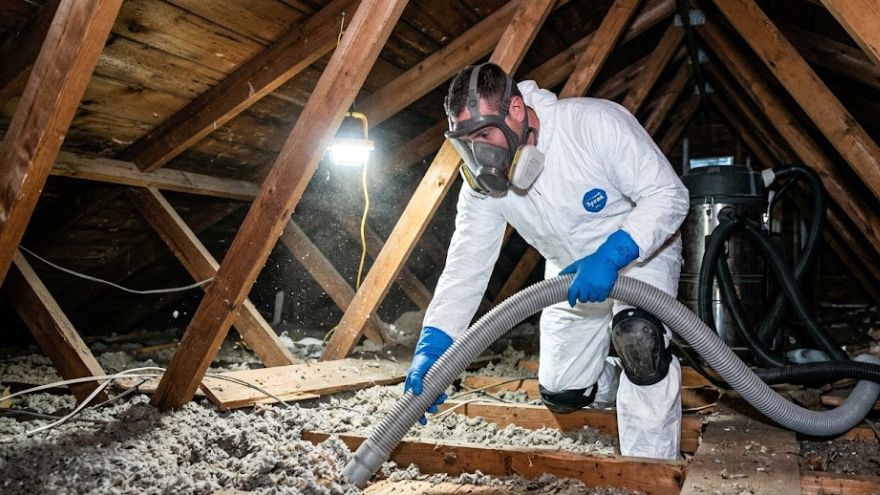
Never dry-sweep. Sweeping or vacuuming dry droppings aerosolizes particles. This is the primary exposure route for hantavirus. Wet first: Apply an EPA-registered disinfectant (a 1:10 bleach solution is the CDC standard alternative) to all droppings and nesting material. Let soak for at least 5 minutes. Remove wet: Remove the wetted material with disposable cloth or paper towels while wearing disposable gloves. Double-bag the waste. Disinfect the surface: Wipe down the area with additional disinfectant after removal. PPE: N95 respirator minimum for any enclosed space (attic, crawl space, small closet). Disposable gloves throughout. Coveralls for attic or crawl-space work.
When professional cleanup is the right choice.
The droppings-in-an-accessible-cabinet situation is manageable DIY if the protocol above is followed. The attic-full-of-droppings situation is not — the physical conditions (enclosed space, heat, low clearance, extensive contamination) and the respiratory risk in an enclosed hot attic make professional cleanup with proper PPE the correct choice. See our droppings cleanup service and attic cleanup service for professional protocol.