Wall-void rodent activity is one of the most common and most mishandled pest situations in Lubbock homes. The sounds start — scratching, rustling, the occasional thump — and most homeowners either ignore them hoping the animal will leave, or try plugging the exterior hole they think the rodent is using. Neither approach resolves the situation. This guide covers how to diagnose what's living in your walls, whether it's a rat, a mouse, or something else, and what the correct treatment sequence looks like.
What you're hearing and what it tells you.
Sound location and timing are the two most diagnostic factors for wall-void activity in Lubbock homes. Scratching and light scurrying concentrated in the kitchen wall void, most active at night, with a pattern of movement from one side of the wall toward the cabinet area: almost certainly house mice following the food-to-nest route. Scratching higher in the wall — in the upper section between the first and second floor, or at the top of a single-story wall near where it meets the ceiling — is more likely to be a roof rat that has entered from the attic and is exploring downward. Scratching at the base of exterior walls with a deeper, more deliberate tone: possibly Norway rats or house mice exploiting a foundation gap.
Volume matters too. Mouse activity in a wall produces a lighter, higher-pitched scratching. Rat activity is heavier, more deliberate, and often produces the occasional audible thump when an animal jumps or lands on a structural member. If the sounds are keeping you awake with their volume, it's more likely to be rats than mice.
The weep-hole route in Lubbock brick homes.
In Lubbock's brick-veneer housing stock, the most common pathway from exterior to wall void is through the weep holes at the base of the brick. These 3/4-inch drainage gaps open directly into the wall cavity, and house mice exploit them consistently. A mouse that enters through a weep hole is immediately inside the wall. From there, it moves up or down the wall cavity following scent trails from previous animals, and eventually finds access to living spaces — through the gap under the kitchen base cabinet, through the toe-kick opening, or through the pipe penetration under the sink. The wall-void scratching you hear is the travel between the entry point and the food source.
Can rodents damage my walls from inside?
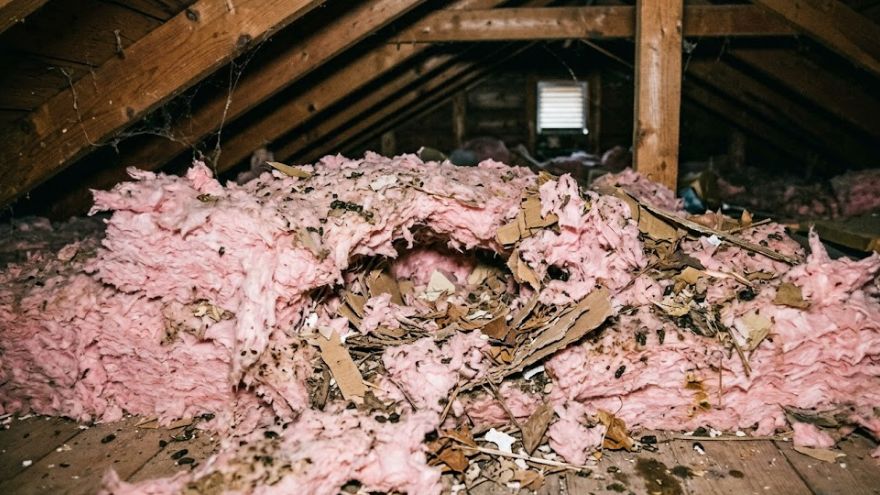
Structurally, rodents in wall voids cause three types of damage. First, they chew wiring — both mice and rats chew wire insulation as a dental behavior, and wiring runs through nearly every wall cavity. A chewed wire in a wall void is a fire risk that's difficult to inspect without opening the wall. Second, they contaminate insulation with urine and droppings — over time, a wall-void colony creates a concentration of contamination that can affect air quality, particularly if the HVAC system draws from that wall space. Third, they gnaw structural wood — primarily to open or enlarge gaps rather than for food, but the damage accumulates in heavily infested older homes.
Treatment for wall-void infestations.
Wall-void rodent treatment is more complex than attic treatment because direct access to the colony is limited. The approach depends on which species is present. For house mice: snap traps deployed on confirmed runways (along wall bases, inside cabinets near the entry point, behind the stove), entry-point sealing at weep holes and utility penetrations, and follow-up droppings inspection 10–14 days after treatment to confirm the colony is gone. For roof rats that have descended from the attic into a wall: treatment has to address the attic population first — rats in walls are typically secondary to an attic infestation, and treating only the wall access point while leaving the attic colony active doesn't resolve the situation.
A question we get frequently: can I seal the exterior entry point without treating the interior? The short answer is no, not safely. Sealing animals inside a wall void without eliminating the population first creates a dead-animal odor problem in 3–7 days that can be worse than the original infestation. The correct sequence is: treat the interior population, verify the colony is eliminated at follow-up, then seal the exterior entry points.
What about dead-rodent odor in walls?
If the scratching has stopped but you're now smelling a distinctive decay odor from a wall section, an animal has died in the wall void. This is common 5–14 days after a baiting program, or when an animal that entered through a gap becomes trapped. Dead-rodent odor in a wall peaks at 3–7 days after death and can persist for 1–3 weeks. The correct approach is locating and removing the carcass rather than waiting it out. See our dead rodent removal service for how we locate carcasses without opening walls in most cases, and how we apply enzymatic deodorizer after removal.
Key point: Wall-void rodent activity in a Lubbock brick home almost always involves weep holes as the primary entry point. Sealing the weep holes with copper mesh as part of the exclusion program is the single most important prevention step for preventing recurrence. See our mouse proofing guide for the full protocol.