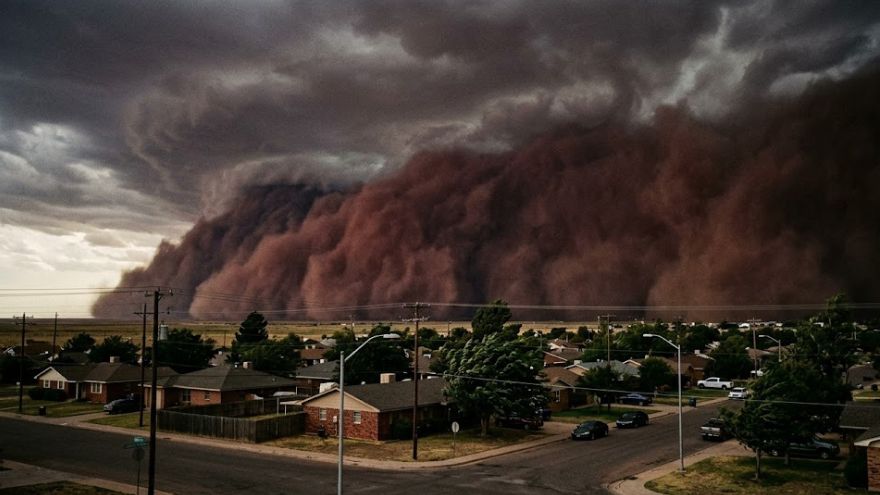
Lubbock's dust storms — haboobs on the South Plains — are a recognized phenomenon that affects the area multiple times per year, most consistently in the spring and early summer. A severe haboob can reduce visibility to near zero, deposit significant amounts of sand and debris across the city, and create conditions that affect rodent behavior and entry-point condition in ways most homeowners don't consider. This guide covers what dust storms do to rodent pressure and what to inspect after a significant event.
What haboobs do to rodent behavior.
A severe Lubbock dust storm is a survival stressor for outdoor rodent populations. The airborne particulate and wind velocity reduce visibility and sensory function for rodents that rely heavily on smell and hearing for navigation. During an active haboob, rodent activity nearly stops — most animals shelter in burrows or dense vegetation for the duration. The interesting period is the 24–48 hours after the storm, when displaced animals resume foraging and explore new routes because their previous scent trails have been disrupted by the dust deposition and wind-disturbed ground cover.
Post-haboob activity is notably exploratory — animals are essentially resetting their scent-navigation map of their territory. This means they'll probe entry points they may not have tested recently, which can lead to first-time entry events in properties that hadn't had rodent issues before the storm. It also means the 48 hours after a haboob is a window when unsealed entry points are at slightly elevated risk of being discovered by exploring rodents.
What dust storms do to entry points.
The dust and debris deposition from a severe haboob can affect physical entry points in two ways. First, fine dust can clog or displace foam-caulk seals around utility penetrations — not a significant structural failure, but enough to create micro-gaps that rodents can widen by gnawing. More significantly, the debris accumulation against the foundation perimeter creates a temporary micro-terrain change that can provide new cover adjacent to foundation entry points. A pile of storm-deposited debris against the foundation is a shelter opportunity for a Norway rat or house mouse exploring the perimeter post-storm.
What to check after a significant Lubbock haboob.
Within 48 hours of a significant dust storm, a brief exterior inspection is worthwhile. Check the foundation perimeter for debris accumulation against the base of the home — clear any pile-up that creates cover near weep holes or foundation gaps. Check any weep-hole copper mesh for dislodged mesh (heavy wind-blown debris can displace improperly anchored mesh). Check door sweeps for debris that might hold the sweep slightly off the threshold, creating a gap. And look for any new burrow openings at the foundation perimeter or dumpster-area edges — disturbed Norway rats may begin new burrow systems in the post-storm settling period.
Haboob frequency and annual rodent pressure cycles.
High-haboob-frequency years tend to correlate with higher annual rodent pressure, though the mechanism is indirect. Haboob conditions are associated with drought periods on the South Plains. Drought-stressed agricultural land reduces natural ground cover, which concentrates field rodent populations in the remaining vegetated areas closer to the city. The combination of higher field rodent density adjacent to the urban area and the post-storm exploratory behavior described above can produce elevated rodent activity for several weeks following a severe haboob season.
Bottom line: A severe haboob is a good reminder to check your foundation perimeter, clear debris from around entry points, and verify your exclusion sealing is intact. If you notice new activity evidence in the 48 hours after a major dust event, it's worth a call — same-day inspection is available at (806) 207-3665.