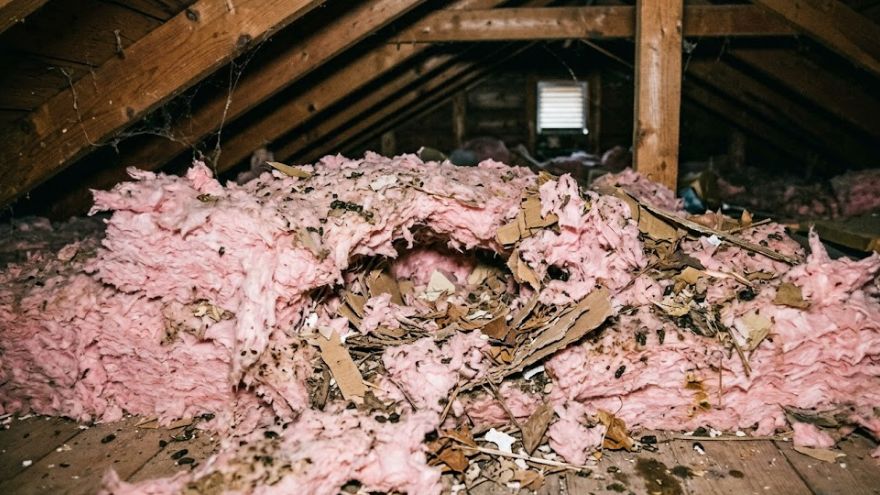
Roof rat activity in a Lubbock attic often goes unnoticed for weeks or months before the homeowner calls us. By the time the attic is actively inspected, we frequently find established nesting, significant insulation compression, and occasionally gnawed electrical wiring that's been damaged for an extended period. This guide covers every early sign that roof rats are in your attic — what to look for, how to find it without going into the attic, and what to do when you find it.
The Lubbock roof-rat attic timeline.
Understanding the timeline helps explain why early detection matters. A roof rat that enters a Lubbock attic through an open soffit vent during a cold front in late October can have an established nesting site and begin producing offspring within six weeks. By December, a pair of roof rats that entered in October may have expanded to 8–10 individuals using the same attic space. The insulation compression, droppings distribution, and wire chewing risk all compound over time. Every week an established colony remains in the attic increases the remediation cost and the probability of finding structural damage.
Sound signs — what you hear and what it means.
Scratching, scurrying, and light thumping sounds from directly above the ceiling are the most common first sign homeowners notice. Roof rats in attics produce a distinctive pattern: heavier and more deliberate than mouse activity in walls, concentrated directly overhead rather than in the walls, and most active in the first few hours after dark and again before dawn. The running pattern of roof rats in attics is consistent — they use the same routes repeatedly, running along attic beams, across the top of the ceiling drywall, and toward their nesting site. If you hear the sounds consistently in the same part of the ceiling night after night, that's the runway location.
Sounds that seem to move across the ceiling (rather than staying in one area) indicate exploration — a rat that recently entered and hasn't established a fixed nesting site yet. This is the earliest intervention point. A population that has been active long enough to establish fixed runways is more difficult to displace.
Attic access inspection — without going in.
You don't need to enter the attic to find initial evidence. From the attic access opening (pull-down stair, hatch, or knee-wall door), shine a flashlight across the insulation surface and look for: disturbed or matted insulation in any section (indicates nesting or repeated traffic), dark droppings scattered across the top of the insulation (roof rat droppings are 1/2 to 3/4 inch, spindle-shaped with pointed ends), and any structural debris — pieces of chewed insulation, bark or plant material mixed into the insulation (nesting material). If any of these are visible from the access opening without entering, the infestation has been active long enough to produce evidence in the most accessible part of the attic. The actual colony is likely deeper in.
Exterior roof-line inspection — the entry-point check.
Roof rats don't randomly appear in attics — they enter through specific access points. From the ground, inspect your roofline for: soffit vents with cracked, missing, or pulled-away screening (this is the most common entry point we find); the junction between the fascia board and roof sheathing where wood has shrunk and separated (visible as a dark gap along the roof edge); and any open pipe chase or chimney base junction where the boot or flashing doesn't fully close the circumference gap. In Tech Terrace, Overton, and Maxey Park — the three highest-pressure neighborhoods in Lubbock for roof-rat calls — the fascia gap at the gable end and the degraded soffit vent screening are the two most consistent entry points we find.
Signs of wire chewing — the highest-risk finding.
Roof rats gnaw on wire insulation continuously as a dental-maintenance behavior. The damage isn't always visible from below, and homeowners rarely check the attic proactively for wire condition. During our attic inspections, we flag every instance of wire chewing we find — the location, the severity, and whether the wire appears to have exposed copper or conductor damage. A chewed wire in an attic with incomplete insulation around the conductor is a documented fire risk. If you enter your attic and find any of the following, flag it for an electrician inspection: wires with chewed or stripped insulation, wires that are resting on insulation with no protective conduit, or wire bundles near nesting material that appears to have been gnawed. Roof rat wire chewing is more common in Dunbar Manhattan Heights and Heart of Lubbock than in newer neighborhoods because the wiring in older homes has had more time to accumulate attic activity.
What to do when you find evidence.
Finding attic evidence of roof rats triggers three decisions in sequence: treatment, exclusion, and cleanup. Treatment eliminates the active population. Exclusion sealing closes the access points so the next cold front doesn't bring in a replacement population. Cleanup addresses the droppings, nesting material, and any insulation contamination the colony left behind. All three steps matter — treatment alone, without exclusion, produces a population that returns the following October. See our full guide to roof rat removal for how the complete program works.
Early intervention pays off: A roof-rat program initiated within two weeks of the first cold-front intrusion typically involves one primary treatment visit and one follow-up. A program initiated after three months of established activity typically requires treatment, follow-up, attic cleanup, and potentially insulation assessment or replacement. The cost difference is significant.