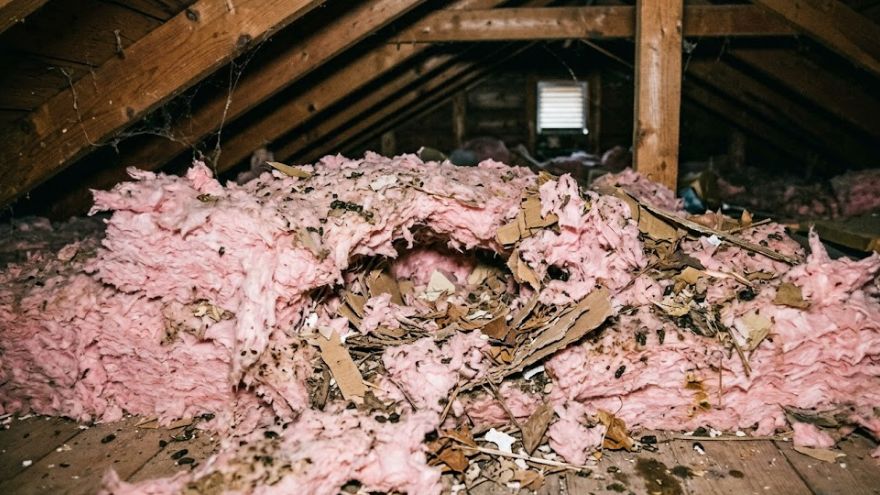
Roof rat attic infestations in Lubbock follow a predictable seasonal pattern. The first significant cold front of the year — typically arriving between mid-October and early November — triggers a rush of attic intrusion calls that represents our highest-volume service period. The calls then taper through February as the population settles into established colonies. The following October, the cycle repeats for homeowners who treated but didn't exclude. This guide explains why the pattern happens, what it takes to break it, and why the exclusion step is what most programs skip.
Why cold fronts trigger attic incursions.
Roof rats are arboreal animals — they live in trees, dense vegetation, and elevated structures when temperatures allow. In Lubbock's established older neighborhoods (Tech Terrace, Overton, Maxey Park, Dunbar Manhattan Heights, Heart of Lubbock), the mature tree canopy provides a large year-round roof-rat population that has no reason to seek human structures during mild weather. A West Texas cold front changes that calculation instantly. When temperatures drop 25–30°F in a single afternoon — which is not unusual during the South Plains cold-front season — roof rats experience acute cold stress and begin probing for warm enclosures.
The attic of a Lubbock home is the obvious destination. It's elevated, accessible from the same tree canopy the rats are already in, consistently warmer than the exterior, and full of soft insulation material for nesting. A roof rat that finds an open soffit vent or a gap at a fascia board during a cold front will enter within minutes. That same rat's reproductive behavior means that one pair in October can become 8–12 individuals by December.
Why the same homes get rats every year.
The most consistent pattern we see is homeowners who called us in November, had a treatment program that eliminated the active population, and are calling again the following November with the same problem. The reason is almost always the same: the entry points were never sealed. Treatment eliminates the current population; exclusion closes the access so the next population can't enter. Without exclusion, the open soffit vent or fascia gap that admitted the October colony is still open for the November colony the following year.
The other factor is scent marking. Roof rats mark their travel routes with urine and gland secretions. These scent marks persist in the attic and on the exterior roof line for months after the animals are gone, and they actively attract new animals to the same access points. A home that had roof rats in October and was treated but not excluded is a high-probability target for re-infestation the following October specifically because the scent trails are still there.
The entry points that matter most in Lubbock's housing stock.
Three entry-point types account for the vast majority of roof-rat attic access in Lubbock's residential construction. First, soffit vents with degraded plastic or fiberglass screening — the UV exposure and temperature cycling at roof level in West Texas causes plastic screening to crack and pull away from the vent frame within 3–5 years, leaving an open gap. The fix is hardware cloth backing installed behind or inside the vent frame, not replacement plastic screening. Second, the fascia-sheathing junction — as fascia boards dry and shrink over decades, a gap opens along the roof edge where the fascia meets the roof sheathing. In older homes (30+ years), this gap can be 1/2 inch or larger — enough for a roof rat to compress through. The fix is sheet metal blocking at the gap or wood blocking with mesh over it. Third, open pipe chases — water heater flues, dryer vent boots, and plumbing vent pipes that penetrate the roof are often left with a gap around the pipe circumference where the boot or flashing doesn't fully close. Foam-and-mesh sealing at these penetrations closes the remaining gap without blocking the pipe function.
What permanent prevention actually requires.
A roof rat prevention program that holds year after year has three components. One: hardware cloth backing on every soffit vent and gable vent. Not plastic, not fiberglass — galvanized hardware cloth rated for outdoor use that won't degrade under West Texas UV and temperature cycling. Two: blocking at the fascia-sheathing junction and any other roof-line gap. This requires inspection from both outside (ladder, ground level) and inside (attic entry), because gaps visible from the interior aren't always visible from the exterior. Three: trim management — branches that overhang or touch the roof line within 6 feet should be cut back to eliminate the primary access route from tree canopy to roof surface.
This is what our rat proofing service does. The same homeowner who called us in four consecutive Octobers doesn't call us a fifth time after we complete the exclusion program.
Timing recommendation: The best time to do roof-line exclusion in Lubbock is August or September, before the first cold fronts. This closes the access points before the pressure arrives. Exclusion done in November, after the first incursion, is still effective — but it may need to seal entry points that animals are already using, which requires treatment concurrent with exclusion.