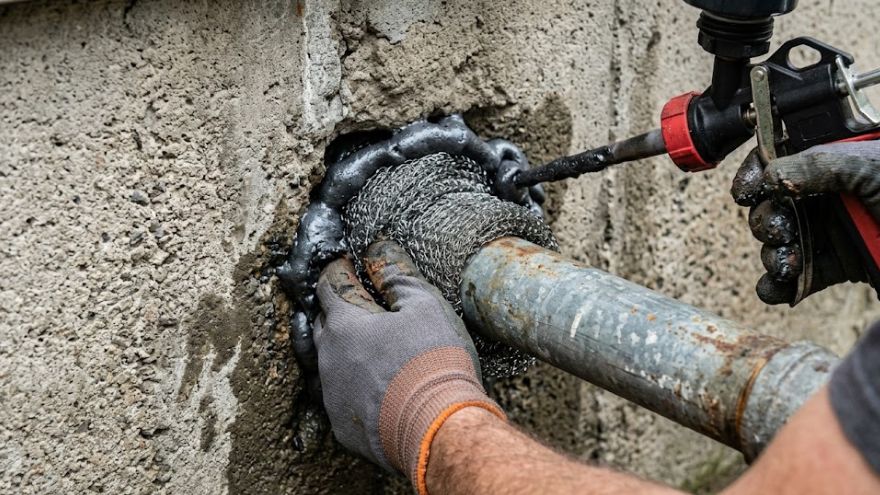
Rodent exclusion is the structural sealing work that closes the entry points rodents use to access a building. It's the step that converts a treatment-only program — which produces temporary results — into a permanent solution. In Lubbock, TX, where the cold-front rodent pressure cycle repeats annually and brick-veneer weep holes provide consistent mouse entry year-round, exclusion is the most important long-term investment a homeowner can make in rodent control. This guide explains how it works, what materials hold in West Texas conditions, and what a complete exclusion program covers.
Why treatment without exclusion doesn't last.
A treatment program that eliminates the current rodent population leaves the same entry points open for the next population. In Lubbock's annual cycle, this means: October cold front brings roof rats to an open soffit vent, rats enter the attic, November treatment eliminates the attic population, the following October cold front brings rats to the same open soffit vent, the cycle repeats. The vent was never sealed. Additionally, the scent marks left by the previous population on the roof line and in the attic actively attract new animals to the same access points. Without exclusion, treatment is an annual cost, not a permanent fix.
The two levels of exclusion in Lubbock homes.
Lubbock's two dominant rodent species access homes at different levels, requiring a two-level exclusion approach.
Foundation-level exclusion (mice and Norway rats): Weep holes sealed with copper mesh, utility pipe penetrations sealed with foam-and-mesh, foundation cracks filled with concrete patch and copper mesh, door sweeps inspected and replaced, garage door bottom seals replaced where worn.
Roof-line exclusion (roof rats): Soffit vents backed with hardware cloth, gable vents reinforced with hardware cloth, fascia-sheathing gap blocked with sheet metal or wood blocking and mesh, pipe chases at the roof sealed with foam-and-mesh, overhanging branches trimmed to eliminate the access route from tree canopy to roof surface.
Both levels should be addressed in the same exclusion program for a comprehensive result. Sealing only the weep holes while leaving the soffit vents open stops mice but not roof rats. Sealing only the roof line while leaving weep holes open stops roof rats but not mice.
Why material choice matters in Lubbock's climate.
West Texas temperature cycling is extreme by national standards. Summer highs above 100°F and winter lows well below freezing, cycling multiple times per week during transition seasons, cause materials to expand and contract to the point of failure within months to years. The materials that fail at Lubbock exterior locations are foam (cracks and degrades, can be chewed), steel wool (rusts and compresses), and standard exterior caulk at foundation-level locations (cracks and separates from the substrate). The materials that hold are copper mesh (doesn't rust, doesn't compress, can't be chewed, expands and contracts with the masonry), hardware cloth (rated for outdoor use, won't degrade under UV or temperature cycling), and sheet metal at structural gaps (permanent when fastened).
The distinction matters because a homeowner who spent money on foam-and-steel-wool exclusion two years ago has exclusion that is likely already failing. Calling it done at that point is a mistake.
What a complete professional exclusion covers.
- Full exterior inspection from foundation to roof line, mapping every gap 1/4 inch or larger
- Copper mesh at all weep holes (40–80 on a standard Lubbock single-story home)
- Foam-and-mesh at all utility pipe and conduit penetrations through the exterior wall
- Hardware cloth at every soffit vent and gable vent
- Sheet metal or blocking at fascia-sheathing gaps
- Door sweep inspection and replacement where worn
- Before-and-after photo documentation of every sealed location
When to schedule exclusion.
The ideal window is August through mid-September — before the first cold fronts of the year. This closes the access points before the October pressure event. If you're already seeing fall activity, exclusion done concurrent with treatment is the next best option. For properties that treated last winter but didn't seal, doing exclusion in the spring (after winter activity has stopped) before the following fall is effective. See our exclusion service page for the full scope and pricing.
Return on investment: A homeowner who pays for treatment + exclusion once typically doesn't need to pay for treatment again. A homeowner who pays for treatment without exclusion pays annually. For most Lubbock homes, the combined investment pays for itself within 2–3 years.