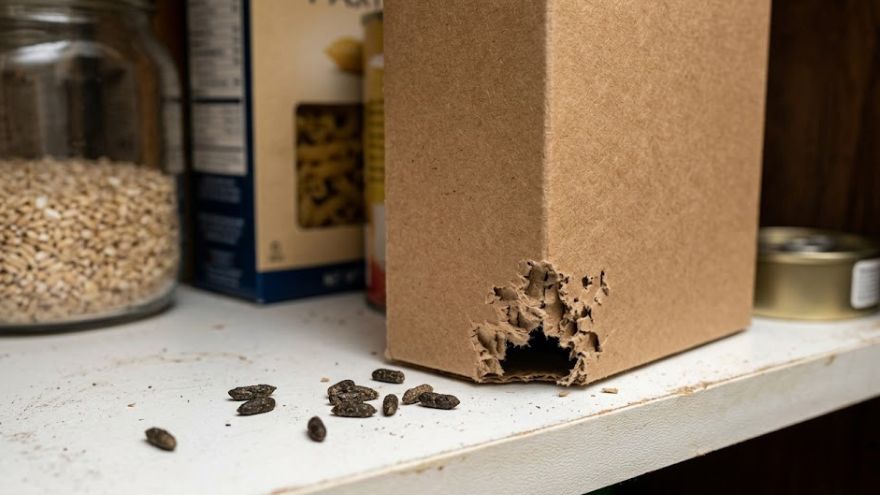
Knowing where mice hide in a Lubbock home isn't just academic — it determines where traps go, what entry points to seal, and how to do a follow-up droppings inspection that actually confirms the infestation is gone. House mice in West Texas follow predictable patterns driven by the same two needs: warmth and proximity to food. The nine locations below cover the vast majority of mouse nesting and hiding sites we find in Lubbock residential properties.
1. Kitchen wall voids.
The kitchen wall cavity is the single most common mouse location we find in Lubbock homes. The kitchen wall is typically adjacent to the exterior brick, which means mice enter through weep holes and find themselves immediately behind the kitchen. The proximity to food, heat from appliances, and the darkness of the wall void creates ideal nesting conditions. Evidence: droppings inside base cabinets (particularly in the corners), scratching sounds from the wall between the stove and refrigerator at night, and a musky odor when the lower cabinet doors are opened.
2. Behind and under the stove.
The space between the stove and the adjacent base cabinet, and the area underneath the stove body, is one of the most reliable mouse locations in a Lubbock kitchen. Food debris accumulates behind the stove faster than almost anywhere else in the kitchen, and the warmth from the appliance adds to the attractiveness. Pull the stove out and inspect the back corners — droppings concentrated in the back corners of this space, grease smears along the adjacent wall, and gnaw marks on any cardboard or paper stored nearby are all indicators.
3. Under and behind the refrigerator.
The motor compartment under the refrigerator generates heat continuously, and the compressed darkness behind and beneath the unit provides ideal shelter. Food debris under the refrigerator (crumbs, spilled liquid that has dried) provides an immediate food source. Droppings under the front edge of the refrigerator, visible when you look underneath with a flashlight, are often the first discovery many Lubbock homeowners make.
4. Water heater closet.
The water heater closet is one of the most overlooked mouse locations in a Lubbock home. It provides continuous warmth from the water heater itself, darkness, and typically a gap around the gas or water supply lines where they enter the wall — a ready-made entry point directly from the exterior or crawl space. Mice that enter through this route often access the adjacent garage or laundry space without ever going through the kitchen. Check the floor of the water heater closet for droppings, and inspect the gap around the supply lines for signs of traffic.
5. Garage wall insulation.
The garage is a major mouse habitat in Lubbock homes because it provides shelter without the barriers that protect interior living spaces, and typically contains multiple food sources: pet food, birdseed, garbage cans, and stored goods. Mice nest inside the wall insulation of the garage interior walls — particularly the wall shared with the house, which is warm from the interior side. If you hear scratching from the garage-side of the wall between your garage and your kitchen, there's a colony in that shared wall.
6. Attic insulation edges.
Attic insulation is less common for house mice than for roof rats, but mice do nest in attic insulation at the attic's perimeter — specifically in the blown-in insulation near the soffit, where it's dark and undisturbed. Mice that enter through attic access points (typically following roof rats or through independent gaps) typically nest at the perimeter rather than toward the center of the attic.
7. Stored-goods areas in the garage.
Cardboard boxes, fabric items, and any stored goods in the garage are prime nesting material. A mouse will shred cardboard and fabric to create nesting material, and a box of stored holiday decorations or clothing is an attractive site. Pull boxes away from the wall occasionally and check behind them — droppings concentrated behind stored boxes in the garage corners are a common finding.
8. Crawl space (in properties that have them).
Not all Lubbock homes have crawl spaces, but older pier-and-beam construction does. The crawl space provides exactly what mice need: undisturbed darkness, ground-level access through foundation vents, and proximity to the floor system above. Mice that nest in crawl spaces access the interior through utility penetrations and gaps in the floor system. If you have a crawl-space foundation and are finding mouse activity in the home without any obvious entry through the walls, the crawl space is the likely entry route.
9. Inside wall voids near exterior pipe penetrations.
Wherever a water supply line, drain pipe, or electrical conduit exits through the exterior wall, there's a potential mouse entry point. These penetrations are typically sealed with caulk or foam at installation, but both materials fail over time in Lubbock's temperature cycling environment. The gap around a 3/4-inch water supply pipe exit is often larger than the pipe itself — exactly the right size for a mouse. Mice that enter here end up in the wall void closest to the penetration, which can be almost anywhere in the home depending on where the penetration is located.
Trap placement note: Snap traps should be placed with the trigger end facing the wall, positioned along the mouse's confirmed runway, not in open floor space. A mouse running along the base of the kitchen wall will trigger a properly placed snap trap; a trap placed in the center of the kitchen floor will not. See our mice control services for how we approach trap placement in each of these locations.